
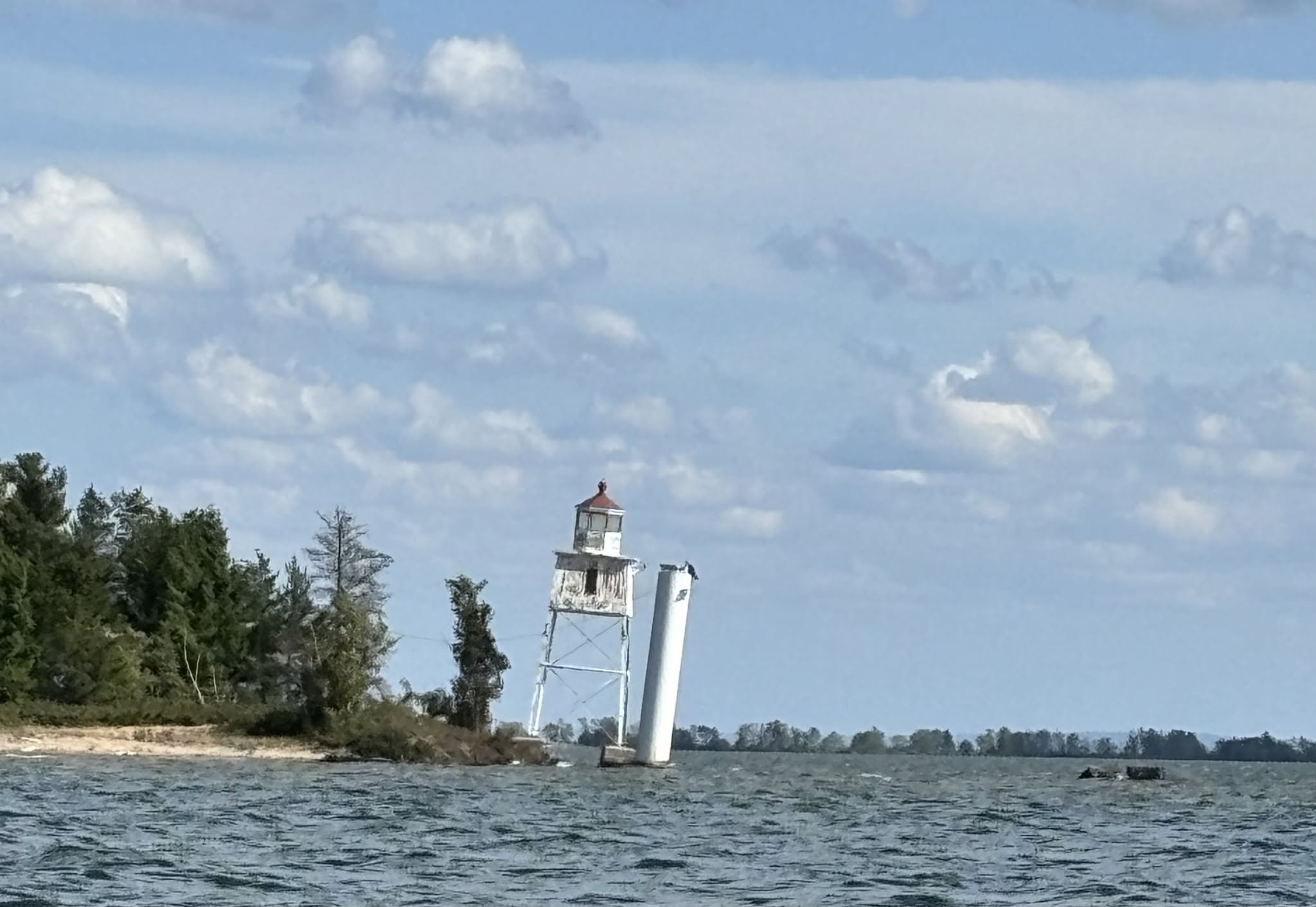


The news that the National Park Service will dismantle the historic Chequamegon Point Light Tower this summer is a stark reminder that historic preservation isn’t easy.
Rising costs, competing needs, and limited access to technical expertise are growing challenges for those working to preserve the buildings, structures, and landscapes that tell the story of our past, even for those agencies with a preservation mandate. Difficult conversations happen every day about what to save.
The decision to dismantle the Chequamegon Point tower highlights another preservation challenge, particularly in the Apostle Islands: location. Maintenance work is limited to the summer months, and even then, access to island properties can be tricky, depending on the weather. The Chequamegon Point tower is the latest example of how vulnerable shoreline structures are to erosion, and damage from wind, waves, and ice. Historic preservation in this setting is a daunting task, and sometimes that involves loss.
But loss is not always inevitable.
The AIHPC is taking this moment to reaffirm our commitment to preserving and interpreting the Apostle Islands’ diverse histories and historic places. This history is reflected not only in its iconic light stations, but also in fishing and logging camps, in stone quarries, and in summer cottages. History in the Apostles begins with the Ojibwe, lives in stories and traditions, and in blueberry patches that have been cared for and harvested for thousands of years. We believe that protecting and sharing the histories and cultures of the people who have called this place home for generations, and from time immemorial, helps us understand and appreciate the islands more deeply, and to become better stewards of the communities—and the world—around us today.
Part of the AIHPC’s work is as a formal philanthropic partner of Apostle Islands National Lakeshore, which enables us to provide direct support for historic preservation projects within the Lakeshore’s boundaries. Our first major collaborative effort is underway at Plenty Charm, a 1940s cottage on Sand Island built for Gert Wellisch, a pioneer of historic preservation within the Apostles. Other projects are being planned, including virtual tours of the National Register-listed historic districts on Sand and Rocky islands.
The AIHPC is also continuing to support historic preservation and education projects in the broader community, among them the Madeline Island Museum’s Canoe Journeys program. This valuable, summer-long series shares traditional Ojibwe canoe building techniques and thousands of years of Ojibwe history with area residents and visitors from around the world.
We are proud to support the people who care for Apostle Islands history, whether that’s by holding a paintbrush, researching and sharing a story, or teaching a new generation a traditional craft. Connecting with the past helps us understand the world around us, giving us insights to plan a better tomorrow. It’s valuable and meaningful work.
We invite you to join us!
Images:
1. The Chequamegon Point Tower (ca. 2014) Photo courtesy of B. Mackreth
2. The Tower showing its lean (ca. September 2024) Photo courtesy of J. Holt
No responses yet